
Difficulty & Readiness Guide
Is Hampta Pass Trek Difficult? — Fitness & Altitude Guide
The abrupt Kullu-to-Lahaul landscape shift makes Hampta Pass Trek Moderate — river crossings on Day 2 are the real crux.
Difficulty Level
Technical Rating
34/100
Preparation Required
Standard Fitness
Prior Experience
Yes
Reality check
Key point
The hardest element on this trek is not altitude — it is river crossings. Balance in icy flowing water, not summit fatigue, is what most trekkers are not prepared for. This is what separates Hampta Pass from most moderate-rated treks.
Caution
The Lahaul descent from the pass is steep and loose — technically harder than the ascent. Trekking poles are not optional on this section. Ankle twist is the most common injury on Day 3.
Tip
Pack Croc sandals or water shoes in your daypack, not your main bag. You need them accessible at the crossing — not buried under camp gear. Soaked boots on Day 2 ruin Days 3 and 4.
Terrain Breakdown
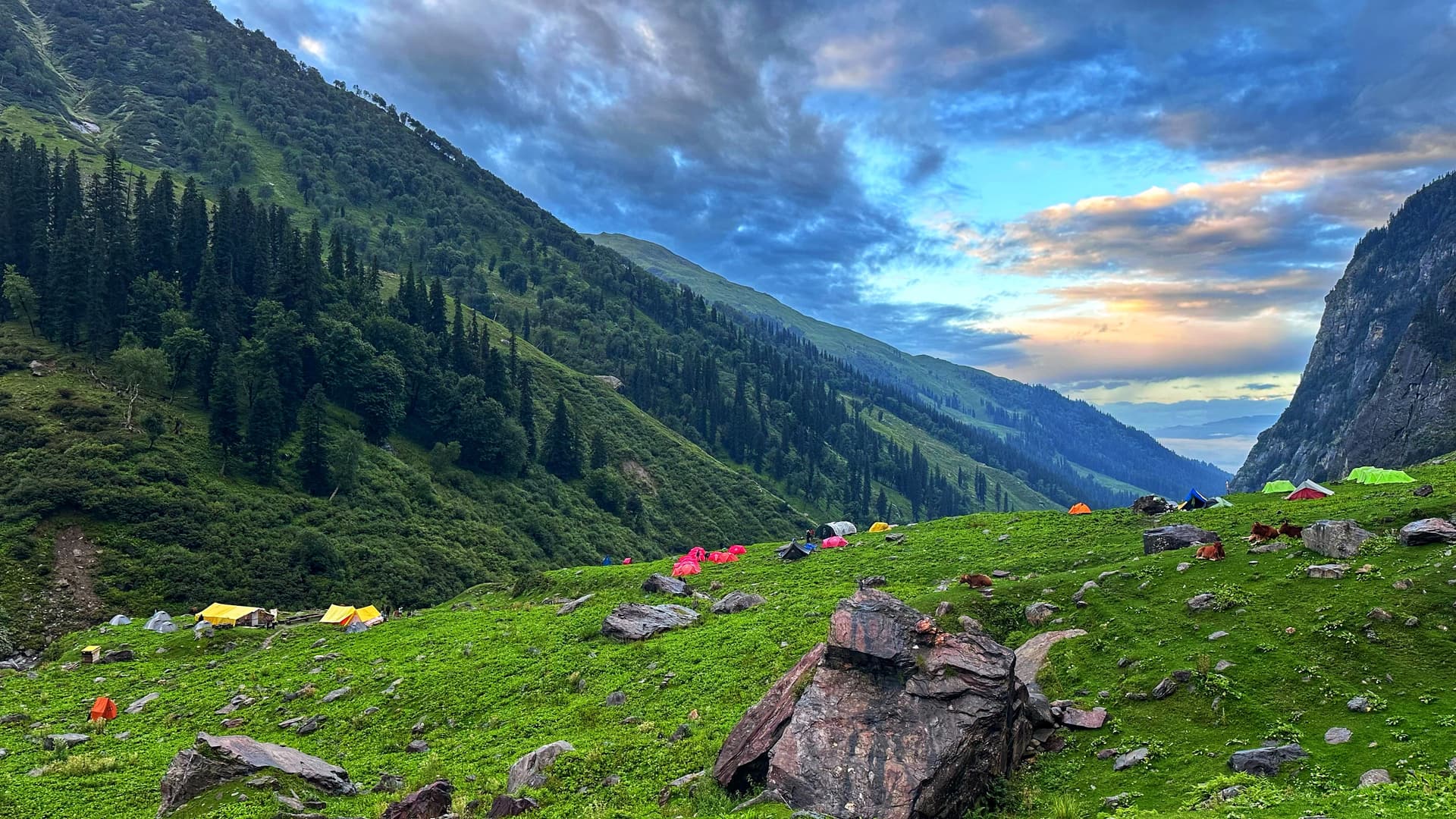
More varied and challenging than Kedarkantha. Kullu side has forest and meadow trails with river crossings. Pass section involves steep climb on snow or loose scree depending on season. Lahaul descent is steep on loose rock. River crossings on Days 2–3 are the most technically demanding element — not height, not snow, but balance in icy flowing water.
Summit Day Notes
Day 3 is the crux — Balu Ka Ghera to Shea Goru via the pass. 500m climb to the pass followed by steep descent into Lahaul. Total 7–8km but terrain is demanding throughout. No fixed ropes or technical gear required. Trekking poles critical for river crossings and descent.
The Descent
Lahaul side descent from the pass is steep and loose. Rocks can be slippery. Take it slow. Unlike Kedarkantha, the descent is technical — not just long.
Preparation
A step up from Kedarkantha. Run 5km in under 30 minutes. Leg strength work is important for the steep descents on both the pass and Lahaul side. Balance training — single leg stands, lateral steps — specifically helps for river crossings. Prior high-altitude experience above 3,000m recommended but not mandatory.
Check your fitness for Hampta Pass TrekAltitude Profile
Maximum altitude 4,270m at the pass. Chandratal adds 4,250m. Acclimatisation is built in via the gradual Kullu approach. AMS is possible but the 2-day ascent before the pass day gives adequate adjustment time for most trekkers.
Run AMS Risk Audit →Trail Performance Data
Max Gradient
30%
Hydration
0.4L per km recommended
Loose Surface Sections
- •Descent from Pass to Shea Goru
Common Mistakes on Hampta Pass Trek
Most injuries and failures on this trail can be avoided by making smarter decisions early on.
Crossing rivers at the wrong time — cross in the morning before peak snowmelt, never in the afternoon
Not unbuckling the hip strap before river crossings — if you fall, you need to ditch the pack quickly
Underestimating the pass day — it is longer and harder than it looks on the map
Skipping Chandratal — most people regret not adding this extension
Not carrying Croc sandals or water shoes for river crossings — soaked boots ruin the next two days
Safety & Medical Risks
Key Risks
River crossings — thigh-deep icy water in June and July with real risk of being swept
AMS at Hampta Pass 14,010ft and Chandratal 14,100ft
Steep loose descent on Lahaul side — ankle twist risk
Rapid weather change at the pass — clear morning to whiteout in 2 hours
AMS (Altitude Sickness)
The pass at 4,270m and Chandratal at 4,250m are real AMS risk points. The 2-day gradual approach helps. Watch for symptoms on Day 3 evening at Shea Goru. Most operators carry supplemental oxygen and pulse oximeters.
Evacuation Route
From Kullu side — return to Manali via Jobra. From Lahaul side — proceed to Chatru where vehicle access is possible. Helicopter available from Chatru in clear weather.
Solo Trekking
Not recommended solo, specifically due to river crossings. Crossing alone with no one to assist if you fall is genuinely dangerous in June–July. September crossings are safer and solo is more manageable then.
Common Trail Ailments
🏥 Nearest ICU: Manali Mission Hospital
Tactical Emergency Hub
> Fastest evacuation via Chattru and Atal Tunnel back to Manali hospital hubs.
Who Can Do This Trek?
Min Age
12+
Max Age
60
Western Toilets at Base
Yes
Solo Female Trekkers
High; very popular trail with multiple group departures daily in season.
Want to know which operators carry certified guides and medical support? See operator safety ratings for Hampta Pass Trek
Also on this trek
Still think it's doable? Share this with your trek mate and see if they agree.
Fit for the challenge?
For challenging treks, safety is paramount. Find operators prioritizing medical support and guide expertise.
Compare operator safety scores