
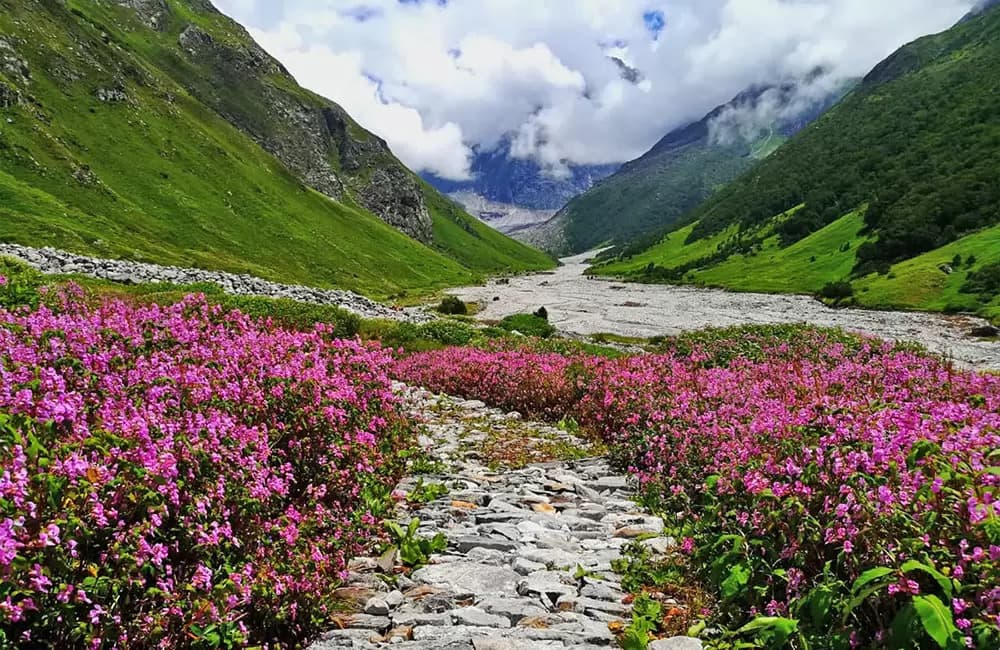
Compare operators for Valley of Flowers Trek
Valley of Flowers Trek
Verified local operators
We list 3 verified operators for Valley of Flowers Trek starting from ₹10,000. All packages include base requirements.
Showing 3 of 3 operators
The Crazy Mountaineers
Est. 2015 · Private batches
From
₹10,000
all inclusive from Dehradun
GROUP
Max 10
STAY
Camping
GUIDE
1 : 15
⏱ Updated Apr 2026
₹10,000

GROUP
Max 10
STAY
—
GUIDE
—
⏱ Updated Apr 2026
₹11,000
Climb High Adventures
Est. 2022
From
₹10,500
all inclusive from Dehradun
GROUP
Max 10
STAY
GuestHouse
GUIDE
1 : 8
⏱ Updated Apr 2026
₹10,500
Found the right operator? Share this list with whoever's coming with you.
About Valley of Flowers Trek
During monsoon, this alpine trail turns into a vibrant expanse of wildflowers, offering one of the most scenic yet approachable Himalayan routes.
Trek Highlights
Pushpawati River Bridge
The dramatic point where the forest trail enters the open glacial valley.
Margaret Legge Memorial
Solitary grave of the botanist surrounded by the flowers she loved.
Hemkund Lake Reflections
Perfect mirror reflections of the seven peaks on the glacial lake.
Common Questions
Is the Valley of Flowers accessible without a guide?
Who discovered the Valley of Flowers?
Are there leeches on the trail?
How difficult is the climb to Hemkund Sahib?
When exactly does the park open and close?
Can this trek be done with children?
What species of flowers can I expect to see?
Are there places to eat inside the National Park?
What weather or flood risks (GLOF) exist?
Is there mobile connectivity in Ghangaria?
How do I choose the best operator via MountRoutes?
What is usually included in the trek cost?
Is the Valley of Flowers accessible without a guide?
Who discovered the Valley of Flowers?
Are there leeches on the trail?
How difficult is the climb to Hemkund Sahib?
When exactly does the park open and close?
Can this trek be done with children?
What species of flowers can I expect to see?
Are there places to eat inside the National Park?
What weather or flood risks (GLOF) exist?
Is there mobile connectivity in Ghangaria?
How do I choose the best operator via MountRoutes?
What is usually included in the trek cost?
Are you a local operator?
Join our platform to list your verified packages for this trek.
Better Prep.
Safer Expeditions.
Free professional-grade tools to audit your altitude safety and generate personalized gear checklists.
Planning Valley Of Flowers Trek?
Get route conditions, operator updates, and season windows before booking.
Don't miss out! Follow us for route updates@mountroutes
No spam. Only useful trek updates.