
Season & Weather Guide
Best Time for Valley of Flowers Trek — Month-by-Month Guide
July to September is the only window for Valley of Flowers Trek — 300+ alpine species bloom only during the monsoon months.
Seasonal Overview
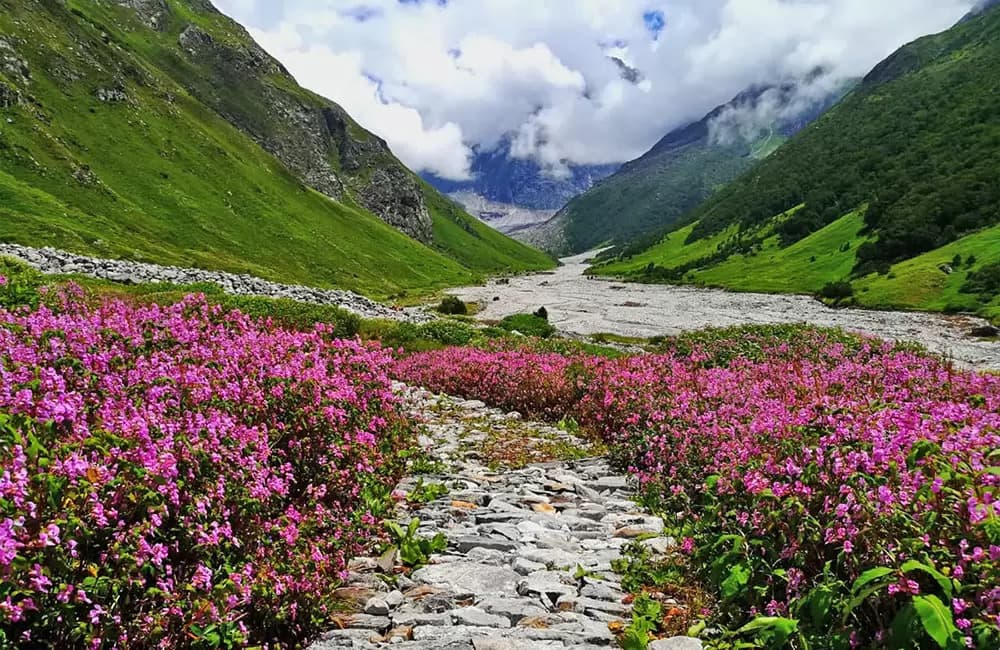
Valley of Flowers is open only July to October — it is snow-covered and closed the rest of the year. This is one of the rare Himalayan treks that is best visited during monsoon. Peak bloom is mid-July to mid-August. September offers stable weather and fewer crowds. October sees the valley closing for winter.
Check which operators run Valley of Flowers Trek during peak season — view available batches and pricing
Peak Season
july, august
Off Season
november, december, january, february, march, april, may
Worth knowing
Key point
September is the best overall month — flowers still present, skies clearer than July–August, mountain views sharper, and significantly fewer crowds.
Caution
The park opens June 1 every year without exception and closes mid-October. There is no trekking window outside this range — do not book without confirming your dates fall within it.
Tip
Peak bloom is mid-July to mid-August. If wildflower photography is your primary goal, plan for this window specifically — not just any month in the open season.
Month-by-Month Trail Guide
January
Conditions
Closed. Under deep snow. No trekking permitted.
Crowds
none
Park closed — snow covered
Park Closed.
February
Conditions
Closed. Under deep snow.
Crowds
none
Park closed
Park Closed.
March
Conditions
Closed. Snow still present.
Crowds
none
Park closed
Park Closed.
April
Conditions
Closed. Snow melting but park not yet open.
Crowds
none
Park closed — opening usually June 1
Park Closed.
May
Conditions
Closed. Park opens June 1 annually.
Crowds
none
Park closed — opening June 1
Park Closed.
June
RecommendedConditions
Park just opened. Snow bridges still intact on Pushpawati river. Valley has early blooms — rhododendrons and anemones. Fewer flowers than July. Road conditions can be unstable from late June monsoon onset.
Crowds
low
Opening month. Snow bridges visible. Early blooms.
July
RecommendedConditions
Peak bloom begins mid-July. Monsoon rains are what bring the valley to life — hundreds of species in full colour. Trail can be wet and slippery. Best photography of the year. Crowds building.
Crowds
high
Peak bloom begins. High rainfall. Carry high-quality ponchos.
August
RecommendedConditions
Peak bloom. Maximum flower diversity — over 500 species. Blue poppy, brahma kamal, cobra lily, orchids all visible. Rains heavy but trail manageable. Most popular month.
Crowds
very high
Maximum floral diversity. Heavy monsoon; landslide risks on roads.
September
RecommendedConditions
Monsoon easing. Flowers still present in good number. Clearer skies and better mountain views than July–August. Least crowded of the recommended months. Best overall balance.
Crowds
medium
Post-monsoon clarity. Flowers begin to fade by mid-month.
October
RecommendedConditions
Park closes mid-October. First snow possible on upper sections. Some flowers still present in early October. Cold nights. Check park closing date before booking.
Crowds
low
Closing month. Crisp air. Hemkund lake begins to freeze.
November
Conditions
Park closed for the season.
Crowds
none
Park closed for winter
Park Closed.
December
Conditions
Park closed. Under snow.
Crowds
none
Park closed — under snow
Park Closed.
Important Tips
This trek is unique — it is best in monsoon, unlike most Himalayan treks. The Pushpawati river crossing near the valley entrance can be half-frozen in early June. No food or camping inside the national park — all meals and stays at Ghangaria.
Also on this trek
Timing makes or breaks a trek. Send this to your group before you decide.
Planning a 2026 trek?
Now that you know when to go, find the best local operators with availability for your preferred dates.
Check peak season packages